The New Look: A fashion revolution
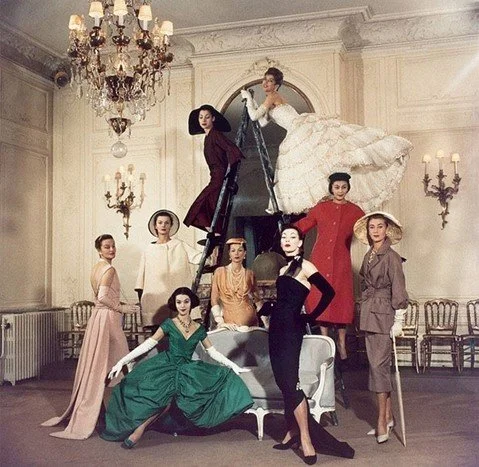
Above: The launch of Dior’s first fashion collection, 1947
In the immediate post-World War II era, the world was eager for a change of direction, and fashion was no exception. Enter Christian Dior's "New Look" of 1947, a term coined by the Harper's Bazaar editor-in-chief, Carmel Snow, which would become one of fashion history's most iconic and influential periods. The "New Look" collection originally had two separate lines, "Corolle" and "Huit," but it was eventually combined to represent a new era of fashion.
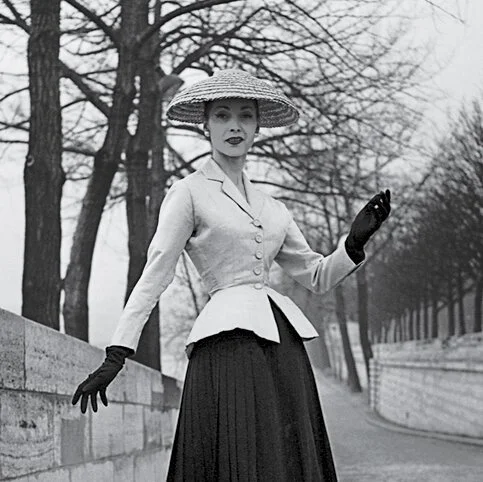
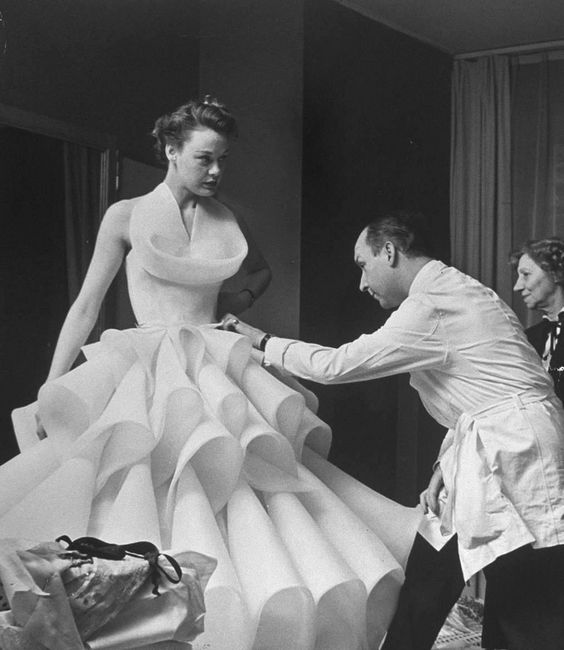
Left: Dior’s Iconic Bar Jacket, 1947, Right: The Evening Dress by Dior
The New Look represented a dramatic shift from the wartime conservativeness and fabric rationing that had dominated the fashion industry during the war. Christian Dior's debut collection featured lavish, full-skirted dresses with dramatically cinched waists, padded hips, and accentuated chests, creating a look of timeless elegance and hyper-femininity. This was a stark contrast to the practical, androgynous, utility-centered clothing of WWII.
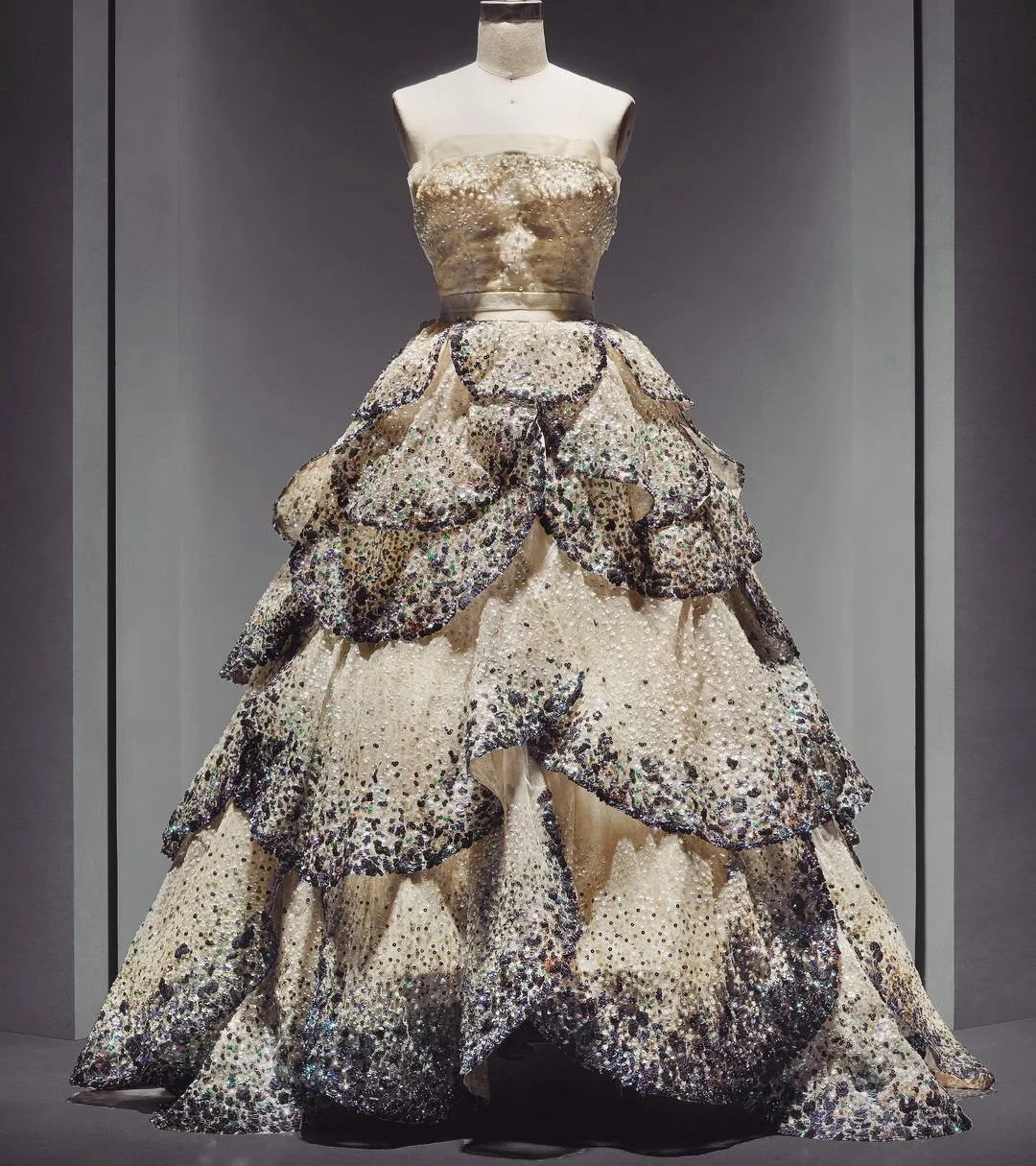
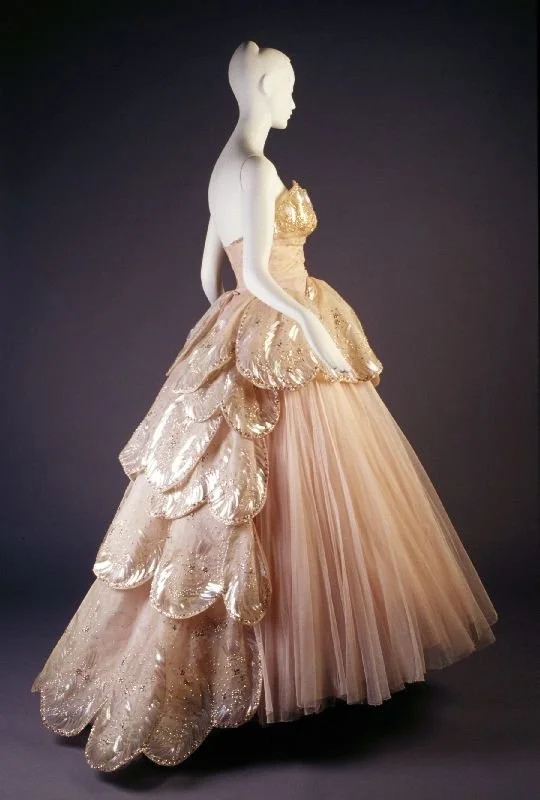
Left: Junon Dress from Dior’s New Look, Right: Venus Dress from Dior’s New Look
Inspired by the figure eight, Dior's New Look collection brought back the S-shape silhouette. It celebrated womanly figures by creating fitted bodices using corsets or girdles and voluptuous calf-length skirts using yards of fabric per design. Not only did the New Look collection use a surplus of cloth, but it also featured luxurious fabrics like silk, taffeta, and lace adorned with intricate embroidery, beading, bows, and patterns. To complete the look, accessories like gloves, hats, pearls, and slender high heels were added to accentuate feminity. Overall, the New Look was the complete inverse of modest wartime fashion.
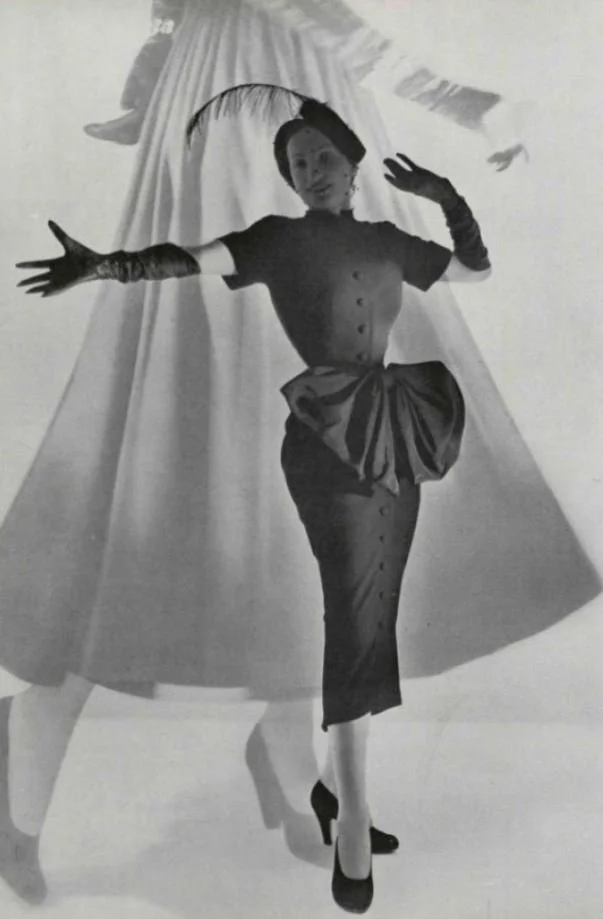
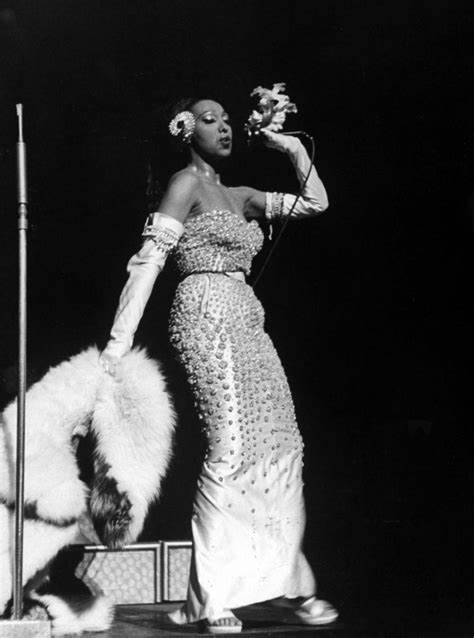
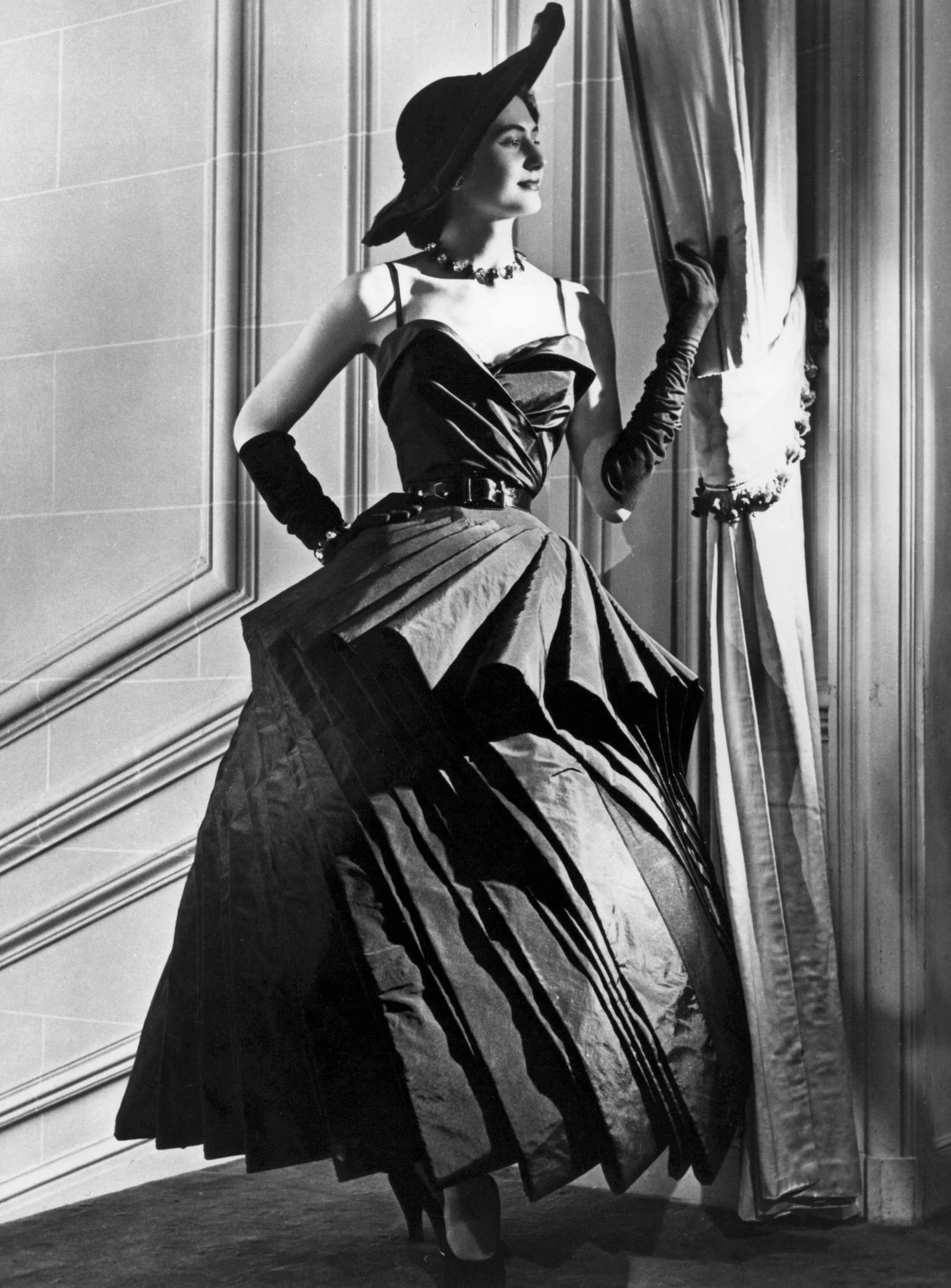
Left: Dior’s Corolle Collection, 1947, Middle: Josephine Baker in Dior’s Mexique Gown, 1951, Right: Dior Evening Dress, 1948
The New Look marked a radical withdrawal from the practical and androgynous styles of the war era. The public met it with both acclaim and criticism. Some praised it as a return to glamour and femininity, while others saw it as extravagant and out of touch with the economic hardships of the time. The New Look also received critique from the women's liberation movement in the US, who felt the return to hyper-femininity threatened the independence and autonomy that women had gained during the war years when their roles shifted from homemakers to providers. Some women even went as far as showing up to fashion shows with picket signs to protest the impracticality of the New Look's key features. In another instance, a Dior model was photographed having her clothes ripped off by a group of older women who felt the designs were an obscene waste and overuse of fabric.
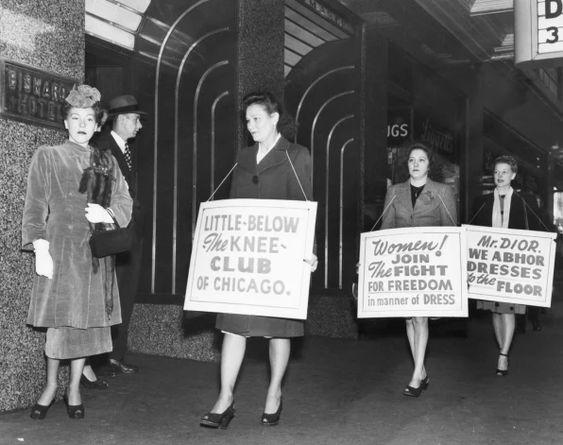
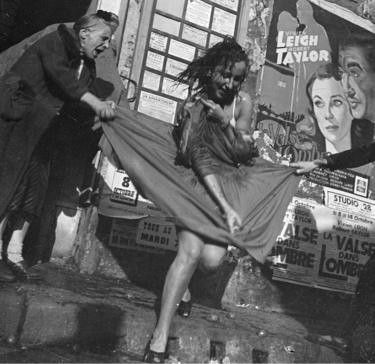
Left: New Look Protests Right: Dior Model Attacked, 1947
Despite the controversy, the New Look had a profound and lasting impact on fashion. It revitalized the Parisian fashion industry, solidifying its position as the global fashion capital. Moreover, it influenced fashion for decades, setting the stage for the chic styles of the 1950s and beyond. Christian Dior's vision reshaped the fashion landscape and became a lasting symbol of glamour, femininity, and sophistication.